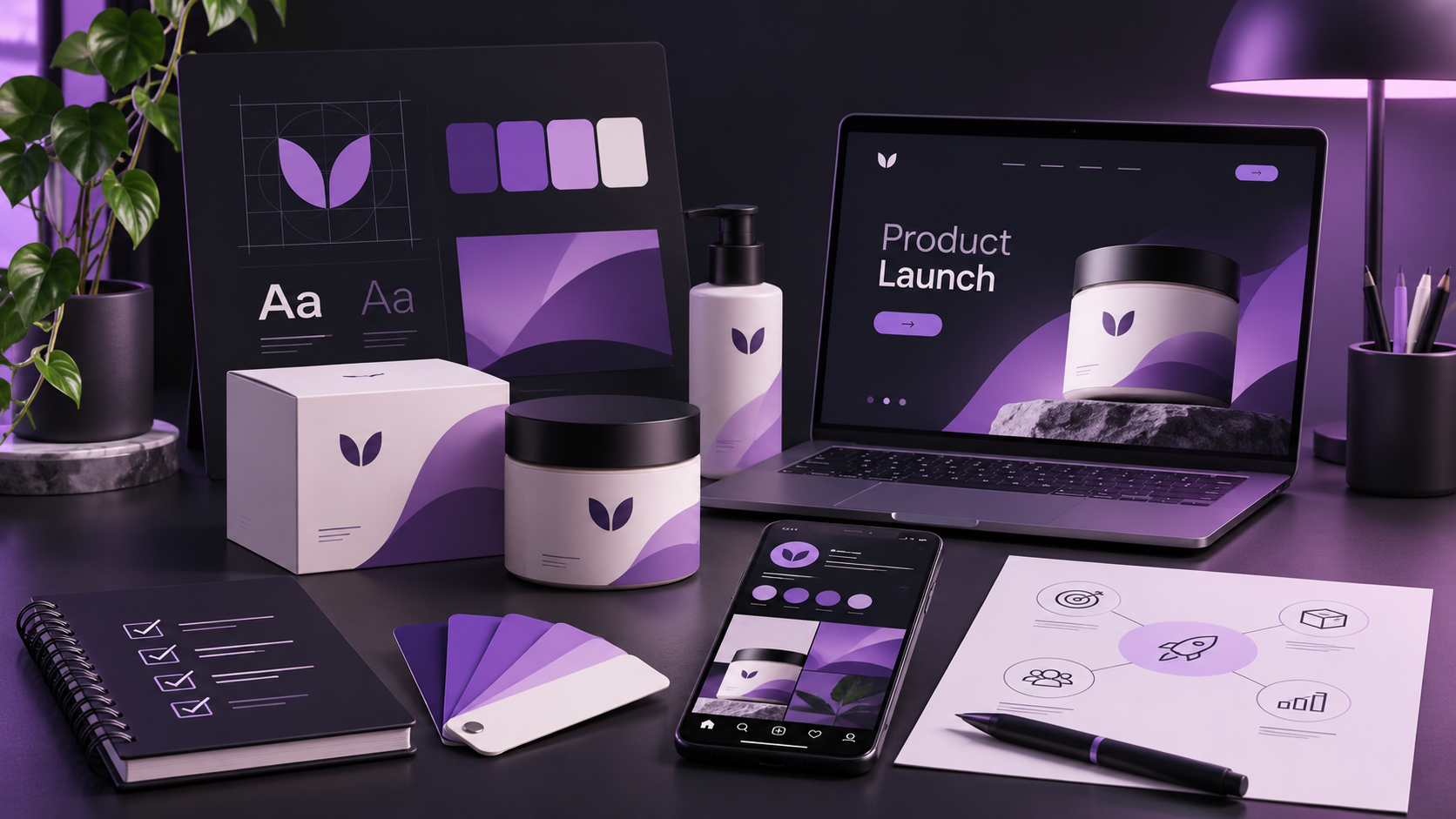
Launching your first product is an exciting milestone. You've worked on the idea, developed the product and finally reached the stage where you're ready to introduce it to the market.
But there's one important thing that deserves just as much attention as the product itself: your brand.
Before customers try your product, they see its name, logo, packaging, labels, website and social media presence. These elements create the first impression and influence how people perceive what you're offering.
For a new business, getting these details right can make a real difference.
Whether you're launching a food product, skincare range, fashion label or a new consumer brand, preparing your brand before launch helps you create a more recognizable and consistent identity.
So, what should you focus on before introducing your first product to the market?
Let's look at the essentials.
1. Define Your Brand Identity Before the Launch
Before investing in packaging or promotional designs, take some time to understand what your brand represents.
A product may solve a particular problem, but your brand gives people a reason to connect with it.
Start by answering a few basic questions:
- Who is your target audience? - What problem does your product solve? - What makes your product different? - How do you want customers to perceive your brand? - What values should your brand communicate?
For example, a premium skincare brand will communicate differently from an affordable everyday skincare range. Their visual styles, messaging, colours and packaging choices should reflect their respective positioning.
A clear brand strategy gives direction to your entire product launch branding process. It also helps ensure that your logo, packaging and marketing materials communicate the same message.
2. Invest in a Professional Logo and Visual Identity
Your logo is one of the first elements customers will associate with your product.
For a new business, it is important to create a logo that is distinctive, easy to recognize and suitable for different applications.
However, a strong brand identity goes beyond just having a logo.
It includes:
- A carefully selected colour palette - Typography that reflects your brand personality - Supporting graphic elements - Logo variations for different applications - A consistent visual style
These elements work together to create a recognizable brand identity across your packaging, website, social media and marketing materials.
If you're working with a logo designer or branding agency, make sure they understand your product category and target audience before developing the visual direction.
A well-planned brand identity gives your product a more professional and consistent appearance from the beginning.
3. Give Your Product Packaging the Attention It Deserves
When customers encounter a new product, its packaging is often the first physical interaction they have with the brand.
This makes product packaging design an important part of your launch strategy.
Good packaging should do more than look attractive. It should communicate what the product is, who it is for and why someone should consider buying it.
For example, food packaging needs to communicate product information clearly while making the product visually appealing. Skincare packaging may focus more on ingredients, product benefits and the overall brand experience.
When planning your packaging design, consider:
- *Packaging structure:* Choose a format suitable for your product and its storage requirements. - *Visual hierarchy:* Make the brand name, product name and important information easy to identify. - *Colours and typography:* Keep the packaging aligned with your overall brand identity. - *Product information:* Include the necessary details and applicable regulatory information. - *Practicality:* Consider durability, usability, printing requirements and production costs.
Your packaging should also work across different sizes and product variations if you plan to expand your range later.
A thoughtful packaging design can help a new product stand out while creating a consistent experience for customers.
4. Create Clear and Consistent Product Labels
Product labels are sometimes treated as a small design detail, but they play an important role in how customers understand a product.
A good product label should balance visual appeal with readability and essential information.
Depending on your product category, you may need to include:
- Product name and description - Ingredients or material information - Net quantity - Manufacturing and expiry details, where applicable - Usage instructions - Required warnings and regulatory information - Manufacturer or marketer details
For food, cosmetics and other regulated product categories, check the applicable labelling requirements before finalizing your artwork.
The design should make important information easy to find without making the label feel overcrowded.
Professional product label design brings together branding, information hierarchy and practical requirements.
5. Build a Consistent Social Media Presence
Your product launch shouldn't begin with a single announcement post.
Customers often discover new brands through Instagram, Facebook, LinkedIn and other digital platforms. Before launch, these channels should give people a clear idea of what your brand offers.
Start preparing your social media branding in advance.
You can create:
- Product introduction posts - Behind-the-scenes content - Product feature highlights - Brand story posts - Packaging previews - Launch countdown creatives - Frequently asked questions
Maintain consistency in your colours, fonts, imagery and overall communication style.
You don't need to post every day or create complicated campaigns. Focus on building curiosity, introducing your product and helping potential customers understand what makes it worth exploring.
6. Prepare Your Website and Product Presentation
Your website is often where interested customers go to learn more about your business.
Before launching, make sure it clearly communicates your brand and product information.
A well-prepared product website should include:
- A clear brand introduction - Product descriptions and features - High-quality product images - Pricing and purchasing information, if applicable - Contact details - Frequently asked questions - Relevant policies and customer support information
Pay attention to how your brand looks across desktop and mobile screens.
Your website design should feel like a natural extension of your logo, packaging and social media identity.
If customers encounter completely different visual styles across these platforms, it can make the brand feel less cohesive.
7. Plan Your Product Launch Marketing Materials
Once your brand identity and product presentation are ready, think about how you will introduce the product to potential customers.
Your launch marketing strategy should include the visual assets needed to communicate your product consistently.
Depending on your business, these may include:
- Product launch banners - Digital advertisements - Social media creatives - Promotional brochures - Product catalogues - Email marketing graphics - Product presentation decks
Having these materials prepared in advance makes the launch process smoother and reduces the need for last-minute design decisions.
It also ensures that your promotional campaigns look connected rather than like separate pieces of communication.
8. Think About Brand Consistency Beyond the First Launch
Your first product launch is only the beginning.
As your business grows, you may introduce new products, different packaging sizes, additional flavours, product variants or entirely new categories.
This is why it is important to establish a flexible brand identity from the start.
Create simple brand guidelines that document your logo usage, colours, typography, design elements and communication style.
This will make it easier to maintain consistency as your product range expands.
Whether you launch one product or twenty, customers should still be able to recognize the brand behind them.
First Product Launch Branding Checklist
Before introducing your product to the market, use this checklist to see whether your brand is ready.
- [ ] Brand positioning and target audience are defined. - [ ] Logo and visual identity are finalized. - [ ] Brand colours and typography are established. - [ ] Product packaging design is ready. - [ ] Product labels have been reviewed. - [ ] Required product information and regulatory details are checked. - [ ] Social media profiles are branded consistently. - [ ] Product images and promotional creatives are prepared. - [ ] Website and product information are ready. - [ ] Launch marketing materials are prepared.
You don't have to complete everything overnight. Planning these elements early can save time, avoid unnecessary revisions and help you launch with greater confidence.
How THE LOGOBOY Can Help Prepare Your Brand for Its First Product Launch
At THE LOGOBOY, we understand that launching a product involves more than developing something worth selling. It also involves creating a brand that people can recognize and connect with.
From logo design and brand identity development to product packaging, label design and marketing creatives, we help businesses bring their visual ideas together.
Whether you're a startup founder preparing to launch your first product or an established business introducing a new product range, having a consistent design approach can make the process easier.
Our focus is on creating thoughtful designs that reflect your brand, communicate your product and work across different customer touchpoints.
*Planning your first product launch? Let's build a brand that's ready for it.*
Visit [THE LOGOBOY](https://www.thelogoboy.com/) to explore our work and discuss your branding and packagin